Why Brand New Windows Can Still Feel Cold
New windows still cold? The wrong coating, gas fill, or spacer can undo a retrofit. Here is how to read the label and pick glass that fits your house.
You spent the money. The old single pane sashes with the rope weights are gone. The new units look sharp, they lock tight, and the installer showed you the foam packed neatly around the frame. Then January arrives, you sit in the chair by the window, and your shoulder gets cold.
That is not a draft. Hold a tissue to the sash and it will not move. What you are feeling is radiant heat loss. Your body is warmer than the glass surface, so it sheds heat toward it. If the inner pane sits at 45 degrees while the room air reads 70, you feel that difference as a cold slab three feet away. People turn the thermostat up to fix it, which never works, because the glass is still cold and now the furnace runs longer.
The frustrating part is that this happens with windows that are technically double pane and technically Energy Star rated. The label said the right things. The glass package underneath said something else.
What Actually Changed and What Did Not
An old single pane window has a center of glass U-factor around 1.0. A basic double pane with clear glass and air fill gets you to roughly 0.48. That sounds like a huge win, and it is a real improvement, but it still leaves the inner surface far colder than your walls. A well built triple pane or a high performance double pane can push toward 0.20, and at that point the glass surface temperature climbs close enough to room temperature that the cold wall sensation disappears.
So the retrofit did work. It just did not work as well as the room needed. Older homes make this worse because the walls around the window are often uninsulated or barely insulated, and the contrast between a warm interior and a cold perimeter gets amplified. Anyone who has crawled around an old house hunting for air leaks the way a great window leak hunt plays out knows that sealing air is only half the job. Stopping conducted and radiated heat is the other half, and that half lives in the glass.
Signs Your Glass Package Is Underperforming
- Condensation forms along the bottom edge of the glass on cold mornings, especially at the corners
- Furniture pulled near the window feels noticeably chillier than the same furniture across the room
- You can feel a temperature gradient walking toward the window even with the sash sealed
- Rooms on the north side never quite catch up no matter how long the heat runs
- Curtains help far more than they should have to
Edge condensation is the tell that matters most. Water forms where the surface is coldest, and on most windows the coldest strip is the perimeter where the two panes meet the spacer. If your spacer conducts heat, that strip runs cold, and moisture in your indoor air finds it every single night.
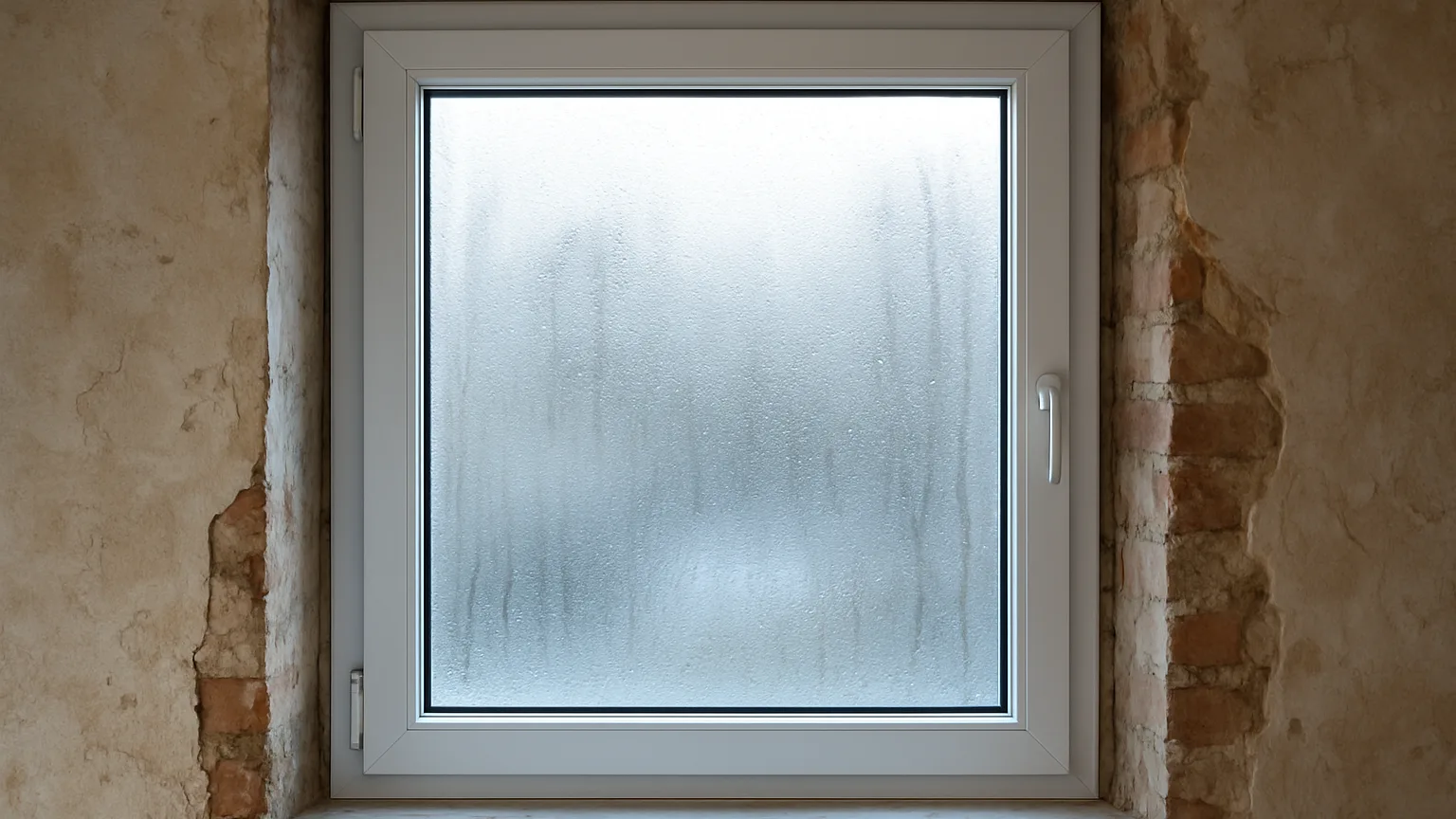
Every new window carries a National Fenestration Rating Council label. Most people glance at it, see a number under 0.30, and assume the job is done. The label actually holds four separate ratings, and they pull in different directions depending on where you live and which wall the window sits in.
U-Factor
This measures how fast heat escapes through the whole assembly, glass and frame together. Lower is better. It typically ranges from about 0.60 down to 0.15. In a cold climate, chasing a low U-factor is the single most direct way to raise the inside glass temperature and kill the cold wall feeling. In a hot climate, U-factor still matters for keeping conditioned air inside, but it stops being the headline number.
Watch for the difference between center of glass U-factor and whole window U-factor. Sales sheets love quoting the center of glass figure because it is always better. The NFRC label reports the whole window number, which includes frame and edge losses. That is the honest one.
Solar Heat Gain Coefficient
SHGC tells you what fraction of the sun's energy passes through, from 0 to 1. A 0.60 SHGC lets a lot of free winter heat in. A 0.22 SHGC blocks most of it. Here is where retrofits go sideways: a homeowner in Minnesota buys the same low SHGC glass a builder specs in Phoenix, then wonders why the south facing living room lost its winter warmth. Meanwhile someone in a hot climate installs high gain glass on a west wall and cooks every afternoon.
The correct move is orientation specific. South facing glass in a heating dominated climate benefits from moderate to high SHGC. East and west glass almost anywhere benefits from low SHGC because low angle sun is brutal and hard to shade. Getting this wrong is a quiet failure, since you never see it, you just pay for it monthly. It is the same logic behind the envelope effect argument that generation equipment cannot outrun a leaky shell.
Visible Transmittance and Air Leakage
VT is how much daylight comes through. Higher numbers mean brighter rooms. Some very low SHGC coatings drop VT into the 0.30s and rooms start to feel gray, and frame proportion feeds the same impression, since an inch of extra frame can make a new unit read wrong in an old opening even when the glass spec is right. Aim to keep VT above 0.50 in living spaces unless glare is a real problem.
Air leakage is reported in cubic feet per minute per square foot of window. Anything at or under 0.10 is tight. Anything at 0.30 is a window you will feel on windy nights. This number is about the sash and frame, not the glass, but it belongs in the same decision.
The Four Specs Side by Side
- Cold climate priority: U-factor 0.25 or lower, SHGC 0.40 or higher on south glass, VT above 0.50
- Mixed climate priority: U-factor 0.28 or lower, SHGC around 0.30 to 0.40, low SHGC on west exposures
- Hot climate priority: SHGC 0.25 or lower everywhere, U-factor 0.30 or better, spectrally selective coating
- Every climate: air leakage at or below 0.10 cfm per square foot
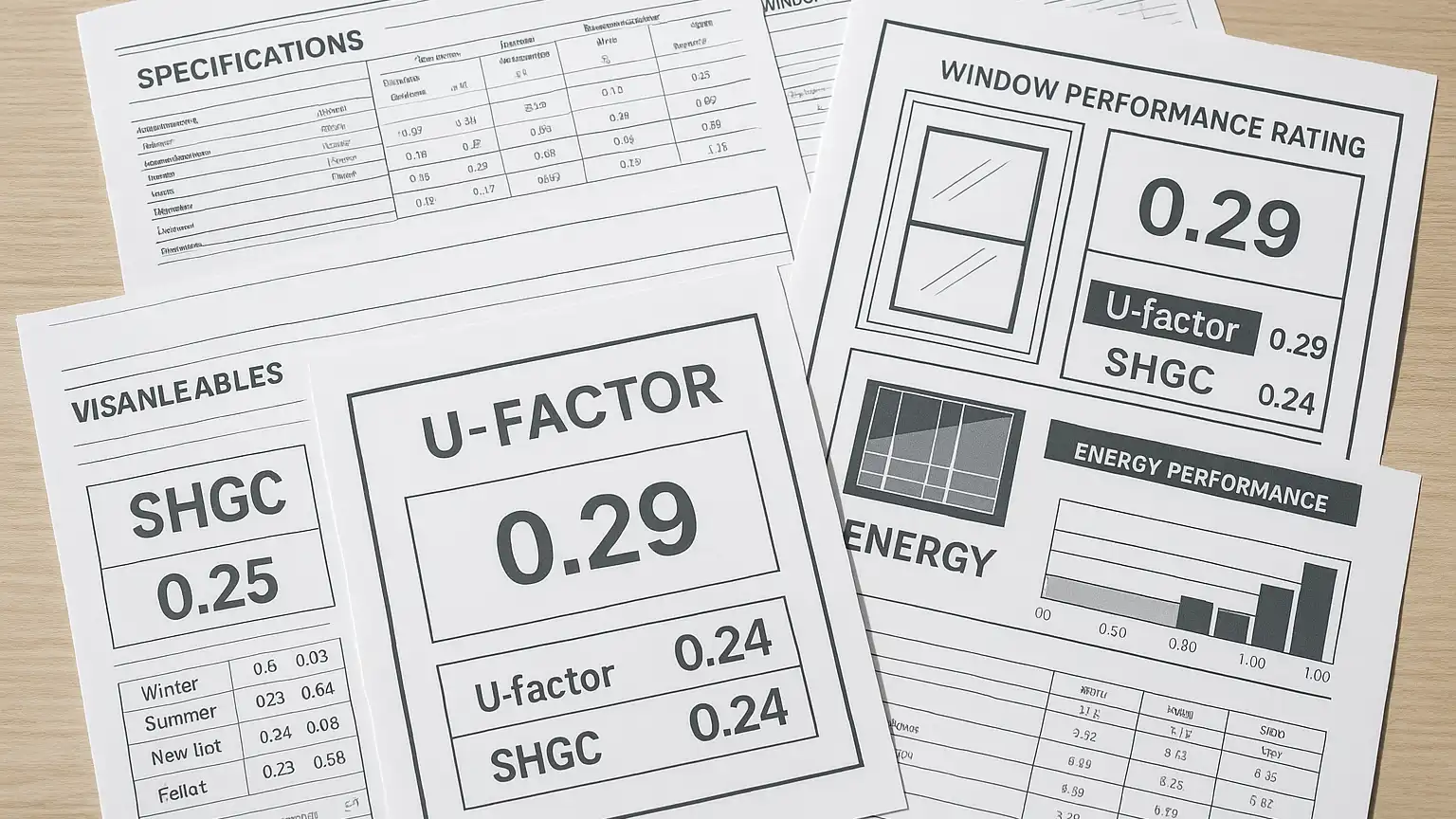
Three components inside the sealed unit produce nearly all of the performance difference between a mediocre window and a great one. None of them are visible from the street, and none of them show up in a showroom comparison unless you ask.
Low-E Coating Placement
Low emissivity coating is a microscopically thin metallic layer that reflects heat back toward its source. Where it sits determines what it does. In a double pane unit the surfaces are numbered 1 through 4, starting outside. Coating on surface 2, the inside face of the outer pane, reflects solar heat back outdoors and suits cooling climates. Coating on surface 3, the outside face of the inner pane, keeps interior heat inside and suits heating climates.
Some high performance units carry coatings on both surfaces, plus a fourth surface coating that raises the interior glass temperature by several degrees. That surface 4 coating is one of the cheapest comfort upgrades available and it is almost never offered unless you request it by name.
Gas Fill Is Not Automatic
Argon between panes cuts conductive heat transfer by roughly 15 to 20 percent compared to air, because argon molecules move more slowly. Krypton does better in narrow cavities and costs considerably more. Two things to verify: that the unit is actually filled, since some economy lines skip it, and that the fill percentage is stated. Ninety percent argon at time of manufacture is the standard worth asking about.
Gas fill also leaks out slowly over decades, at maybe half a percent to one percent a year in a well sealed unit. A quality edge seal matters as much as the fill itself. When people compare bids and start asking hard questions about what is really inside the glass, the conversation shifts fast, which is why a short list of contractors worth letting past your door tends to be shorter than the phone book suggests.
The Spacer Nobody Talks About
The spacer holds the two panes apart around the perimeter. Traditional aluminum spacers are excellent thermal conductors, which is exactly wrong for this job. They create a cold bridge right at the glass edge. That is why condensation shows up along the bottom rail first.
Warm edge spacers use stainless steel, structural foam, or thermoplastic instead. The difference in edge temperature can run 6 to 10 degrees. On a humid winter night, that is the gap between clear glass and a puddle on the sill.
- Aluminum box spacer: cheapest, worst thermally, still shows up in budget lines
- Stainless steel: a real improvement, common in mid tier units
- Structural foam: strong thermal performance, good durability record
- Thermoplastic spacer: excellent edge temperatures and a very good moisture seal
Matching Glass to an Older Wall
An older home changes the calculation. If the walls carry little insulation, installing extremely low U-factor glass can make the window the warmest part of the wall, which sounds great but sometimes shifts condensation to the wall surface instead. Older openings can also hide a permit surprise once the swap touches framing or changes the opening size, so settle that question before glass gets ordered. If your house has plaster over uninsulated framing, plan the window upgrade alongside some level of wall or attic improvement so the assembly stays balanced.
Moisture management deserves the same attention. Bathrooms and kitchens push far more humidity into the air than the rest of the house, and window frames in those rooms take the worst of it. The same material logic behind a polymer advantage in wet rooms applies to what you put around the glass. Wood swells, engineered cores hold their shape, and the finish tells the story after five winters.
Where the Money Actually Goes
The gap between a window that fixes the cold corner of your living room and one that merely stops the whistling is not the frame, the color, or the hardware. It is a coating placed on the correct surface, a cavity genuinely filled with argon, and a spacer that does not carry cold straight to the glass edge. Those three items add a modest amount to the unit price and deliver almost all of the comfort you were hoping to buy. Skipping them saves a little at signing and costs you every heating season afterward.
Before you approve a quote, ask for the NFRC label for the exact glass package being ordered, not the manufacturer's best available option. Confirm the U-factor, the SHGC for each orientation, the coating surface number, the gas fill percentage, and the spacer material in writing. A good installer will answer all five without hesitation because they already made those choices deliberately. Anyone who deflects is telling you something useful. Your house has stood for decades and the glass you choose now will outlast the next two water heaters, so it is worth the twenty minutes it takes to read the sticker properly.
Find the perfect Materials for your project
This section is designed to simplify the process of choosing the right materials, whether for building, remodeling, or decorating, by providing detailed descriptions, comparisons, and practical tips. Here, you'll find valuable insights and expert recommendations to ensure the materials you choose enhance the durability, aesthetic appeal, and functionality of your project.