Your roof has been fighting a war since the day it was installed, and it hasn't taken a single day off. Most homeowners don't think about their roof until water shows up somewhere it shouldn't, but by that point, the damage has typically been building for months or years. The real story of roof failure isn't dramatic, it's gradual. It's the kind of deterioration that happens in plain sight but goes unnoticed until a repair bill makes it impossible to ignore.
Weather is the primary aggressor in this slow breakdown, and it attacks through four main forces: ultraviolet radiation, hail impact, wind stress, and thermal cycling. Each one works on roofing materials differently, targeting specific vulnerabilities in asphalt, metal, tile, and membrane systems. What makes this particularly challenging for homeowners is that the damage from each force compounds over time, meaning a roof softened by years of UV exposure will absorb hail impact far more destructively than a newer, properly maintained one. The materials don't fail all at once. They fail layer by layer, bond by bond.
Understanding how these forces interact with the materials overhead gives homeowners and property managers a significant advantage. According to the National Roofing Contractors Association, standard asphalt shingles last 15 to 20 years under moderate climate conditions, but that lifespan can be cut significantly shorter in regions with intense sun, frequent storms, or dramatic temperature swings. Knowing what's happening on top of your home isn't just interesting science, it's the difference between a planned replacement and an emergency repair.
The Sun Is Burning Through Your Roof One Molecule at a Time
How UV Radiation Attacks Roofing Materials
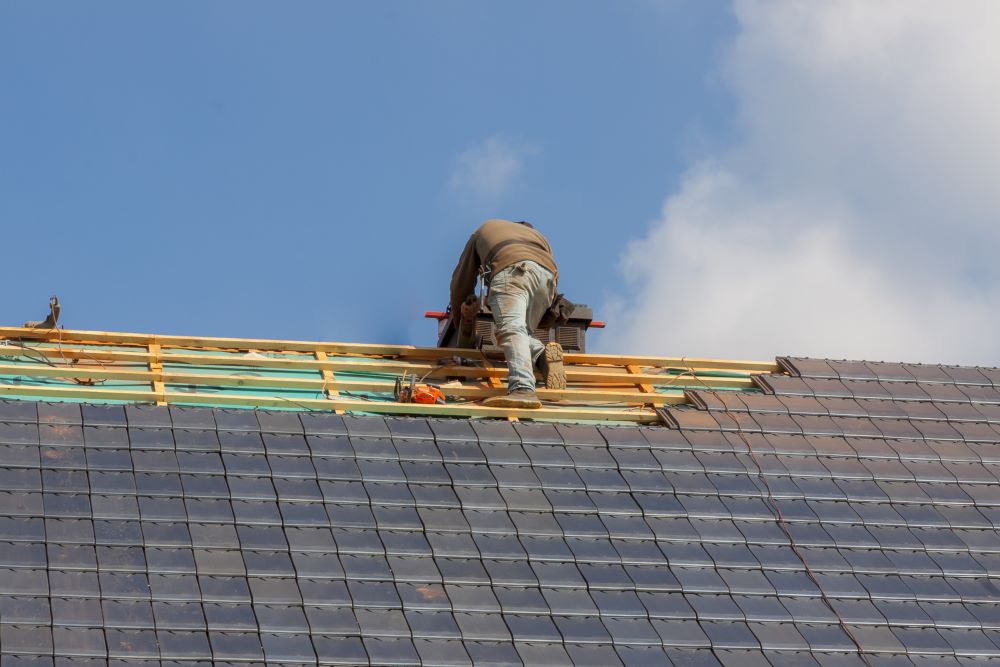
Ultraviolet radiation is invisible, relentless, and remarkably destructive to organic-based roofing materials. The mechanism isn't dramatic, it's chemical. UV rays break down the molecular bonds within asphalt binders, causing the volatile oils that keep shingles pliable to evaporate at an accelerated rate. As those oils dissipate, the shingle loses its flexibility and begins hardening, becoming brittle and prone to cracking under any additional physical stress. This is why old shingles feel almost ceramic when you handle them and why they crumble rather than bend.
Wood shakes and shingles face a different but equally damaging UV process. Exposure to UV radiation attacks lignin, the biopolymer that acts as the adhesive holding cellulose fibers together within wood. As the lignin breaks down, surface erosion begins, color fades, and the structural integrity of the wood gradually weakens from the outside in. For plastics used in roofing membranes and flashings, UV exposure causes chalking, color change, and a loss of tensile strength that often goes undetected until a mechanical failure occurs.
On dark-colored roofs, the problem is intensified. Dark surfaces absorb more solar heat, pushing rooftop temperatures well above 150°F on summer afternoons, which accelerates the aging of sealants, underlayments, and primary roofing materials simultaneously. The combination of UV degradation and extreme heat creates a compound weathering force that no roofing material is fully immune to, only better or worse at resisting.
What UV Degradation Looks Like by Material
- Asphalt shingles: Granule loss in gutters or downspouts, fading color, curling edges, and surface cracking are all signs that UV has been doing its work for a while.
- Single-ply membranes (TPO, PVC, EPDM): Chalking on the surface, loss of flexibility, and visible surface oxidation indicate UV polymer breakdown.
- Wood shakes: Graying of the surface, splitting along the grain, and a rough, fibrous texture are signs of UV erosion of the lignin binder.
- Metal roofing coatings: Fading, chalking, and reduction of surface gloss signal that protective finishes are breaking down and the underlying metal is becoming more exposed.
Hail: The Most Violent and Financially Costly Weather Attack
Hail is the blunt instrument of roofing damage. Unlike UV radiation, which operates quietly over years, a single hailstorm can structurally compromise a roof in under an hour. The damage depends heavily on hailstone size, wind direction, and the condition of the roofing material at the time of impact. A roof already weakened by UV exposure and thermal cycling has significantly less impact resistance than one that is newer or recently inspected and maintained.
For asphalt shingles, hail impact causes the protective mineral granule layer to fracture and dislodge. Those granules aren't decorative, they are the primary UV shield for the asphalt beneath. Once stripped away in impact zones, the exposed asphalt begins degrading at a dramatically accelerated rate. Small circular impact marks that look cosmetic to the untrained eye can represent the beginning of significant structural failure. Soft spots develop, underlying layers become vulnerable to moisture, and what might have been a 20-year roof becomes a 12-year roof after one bad storm season.
Metal roofing handles hail differently. Aluminum and steel panels can sustain dents and dimples that alter panel geometry, potentially creating water ponding zones and putting stress on protective coatings. Tile roofing, while excellent for heat and UV resistance, carries its own vulnerability to large hailstones. A direct impact from a hailstone over one inch in diameter can crack or shatter clay or concrete tile, immediately creating an opening for water infiltration.
The Financial Reality of Hail Damage
The numbers around hail damage are striking. The average insurance payout for a hail-damaged roof runs approximately $12,000, a figure that reflects not just shingle replacement but the broader envelope of gutter damage, flashing repair, and sometimes full system replacement. In 2024, hail damage accounted for between 50% and 80% of all thunderstorm-related insurance claims in the United States, resulting in an estimated $10 billion in property damage nationwide.
These aren't isolated events limited to the Midwest. Hail damage is now a nationwide concern, with storm frequency and hailstone size both trending upward.
Wind: The Force That Never Shows Up the Same Way Twice
The Physics of Wind Damage on Roofing Systems
Wind damage is misunderstood by most homeowners because it doesn't always look dramatic. A 70-mph gust doesn't necessarily rip sheets of shingles off a roof. More often, it creates uplift pressure along edges and corners, working on the perimeter fasteners and sealant bonds that hold the system together. Over multiple storm events, those bonds weaken, shingles begin to lift at their edges, and the sealant strips that keep adjacent shingles locked down start to fail. By the time a shingle actually blows off, a roofing professional would have been able to identify the progressive failure weeks or months earlier.
Wind also drives debris. A branch or piece of loose cladding moving at wind speed carries enough kinetic energy to puncture asphalt shingles, crack tile, and score metal coatings. Beyond direct impact, wind-driven rain is a mechanism all its own. When water is pushed horizontally against a roof surface, it can work its way beneath shingles and flashings that would easily shed vertically falling rain, finding every small gap left by UV-compromised sealants or thermally loosened fasteners.
The edges and corners of any roof are the highest-risk zones for wind damage because these areas experience the greatest negative pressure during high-wind events. Proper installation of starter strips and edge fastening patterns matters enormously here, as does the ongoing condition of the sealant bonds between shingles. Homes in wind-prone regions benefit significantly from impact-rated, high-wind-rated shingle products and from regular professional inspection of vulnerable perimeter areas.
Thermal Cycling: The Invisible Enemy Working From Sunrise to Sundown
How Temperature Swings Slowly Destroy Roofing Materials
Thermal cycling is the least dramatic and perhaps most underestimated of the four major weathering forces. Every day, without exception, roofing materials heat up and expand as the sun rises, then cool and contract as temperatures drop overnight. On a dark roof in summer, surface temperatures can swing by 80°F to 100°F or more within a single day. Over a 20-year roof lifespan, that amounts to thousands of individual expansion-contraction cycles applied to every fastener, seam, sealant joint, and membrane bond.
The National Research Council Canada has noted that the durability and service life of a roof is to a large degree dependent on the temperatures it experiences, and that understanding thermal response is essential for designing durable roofing systems. In practical terms, this means that a roof installed without accommodation for thermal movement is on a slow path toward failure from day one.
For metal roofing, thermal expansion is measurable and significant. A 100-foot steel roof panel experiencing a 50°F temperature change will expand by roughly a third of an inch. Multiply that across a full roof system with multiple panels, fixed fasteners, and varying material expansion rates, and the cumulative stress on seams and connections becomes substantial over time. Fasteners can work loose, panels can warp or oil-can, and protective coatings crack, inviting corrosion to follow.
Asphalt shingles experience thermal cycling differently. The repeated expansion and contraction accelerates the loss of volatile oils from the asphalt binder, making the shingles brittle at a faster rate than UV alone would produce. Sealants used throughout the roofing system are particularly vulnerable. Many thermal cycling sealant failures go unnoticed until a rain event pushes water through a joint that appears visually intact but has internally fractured and lost its bond.
Thermal Cycling and Single-Ply Membranes
Flat roofing membranes like TPO, EPDM, and PVC face their own set of thermal cycling challenges. As these flexible materials expand and contract daily, they place stress on the adhesive bonds and mechanical fasteners holding them in place. Seams are the most vulnerable point in any membrane system. Repeated movement causes laps to peel, stress points to fatigue, and membrane edges to pull away from flashings and penetrations. An older membrane behaves much like an old rubber band, progressively losing elasticity until any additional stress causes it to split rather than flex.
When Weather Damage Becomes a Claim
At some point, the cumulative damage that weather delivers becomes a formal financial event. That transition from wear to claim is one that many homeowners navigate unprepared, and the gap between what they expect to recover and what they actually receive often comes down to documentation, timing, and the quality of professional assessment they have behind them.
Roof damage accounts for the majority of hail-related insurance claims in the United States, with the average homeowner claim totaling nearly $12,000. That figure represents real money, and the process of recovering it requires a homeowner to move quickly, document thoroughly, and understand what their policy actually covers before they pick up the phone. Own Arizona's step-by-step guide to filing a roof damage claim is an excellent resource that walks homeowners through the entire process from initial damage assessment through settlement, and it's worth bookmarking before a storm season begins rather than scrambling for guidance after one ends.
Chris Owens, Lead Inspector at Complete Roofing AL, one of the top-rated roofing contractors in Alabama serving both residential and commercial clients, puts it plainly: "The homeowners who come out of a hail claim in the best position are the ones who got a professional inspection done before the adjuster ever showed up. The adjuster's job is to assess for the insurance company. You need someone in your corner documenting what actually happened to the materials."
That perspective reflects what most experienced roofing professionals will tell you. The condition of the materials at the time of the storm matters, the thoroughness of documentation matters, and having an independent contractor assessment alongside the insurer's adjuster report gives a homeowner both leverage and clarity in what can otherwise be a frustrating process.
Material Selection as a Long-Term Defense Strategy
Not all roofing materials respond to weathering forces the same way, and that gap in performance has real financial implications over a roof's service life. Impact-resistant Class 4 shingles, made with polymer-modified asphalt, can absorb significantly more hail energy before sustaining damage than standard three-tab shingles. Metal roofing with properly engineered expansion joints and high-quality factory coatings resists UV degradation far longer than organic materials. Standing seam metal systems, when installed with floating clip systems rather than fixed fasteners, accommodate thermal movement without building up the joint stress that eventually causes failure.
Tile roofing remains one of the best performers against UV degradation and heat-related aging. The dense, fired material simply doesn't respond to UV in the way that asphalt or wood does, and its thermal mass helps moderate temperature swings at the roof surface. However, its brittleness under impact is a real vulnerability in hail-prone regions, and homeowners in those areas often benefit from supplemental insurance riders that specifically cover tile impact damage.
Reflective roofing, whether through light-colored materials or applied cool-roof coatings, addresses thermal cycling by reducing the temperature differential the roof experiences across a day. By keeping surface temperatures lower, these systems reduce the daily expansion-contraction cycle and simultaneously cut down on the UV-plus-heat compound degradation that shortens the life of organic materials.
Maria Castillo, a home insurance consultant based in Phoenix, Arizona, who has spent over a decade reviewing residential property claims, offers this observation: "The claims I see that surprise homeowners most are the ones where thermal cycling damage is mistaken for normal wear and tear. When sealants fail and water gets in, it can look like old age. But a qualified roofer can often trace that back to installation choices that didn't account for thermal movement. That distinction can make or break a claim."
The Roof Overhead Is Already Keeping Score
Every season that passes without an inspection is a season of compounding damage that goes undocumented. UV rays have been breaking down binders, hail may have cleared granules from zones invisible from the ground, wind events have tested sealant bonds, and thermal cycles have been working on every fastener and seam from the inside out. None of it announces itself. It simply accumulates until a ceiling stain, a failed inspection, or a storm finally makes it impossible to ignore.
The strongest position any homeowner can be in is one of informed awareness: knowing the material that covers their home, understanding the specific weather stresses that climate delivers, and having a professional set of eyes on the system at least once a year and after any significant storm event. The materials above your head are engineered to perform under pressure, but they perform longest and best when the people beneath them are paying attention.
Find the perfect Materials for your project
This section is designed to simplify the process of choosing the right materials, whether for building, remodeling, or decorating, by providing detailed descriptions, comparisons, and practical tips. Here, you'll find valuable insights and expert recommendations to ensure the materials you choose enhance the durability, aesthetic appeal, and functionality of your project.